
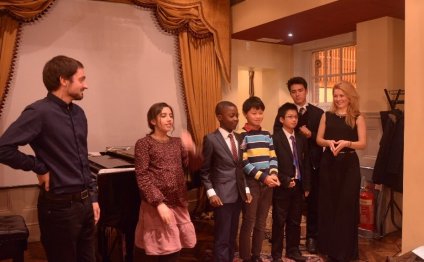
Professional Piano lessons
Piano pedagogy is the study of the teaching of piano playing. Whereas the professional field of music education pertains to the teaching of music in school classrooms or group settings, piano pedagogy focuses on the teaching of musical skills to individual piano students. This is often done via private or semiprivate instructions, commonly referred to as piano lessons. The practitioners of piano pedagogy are called piano pedagogues, or simply, piano teachers.
Professional training[edit]
The range of professionalism among teachers of piano is undoubtedly wide. "Competent instruction is not always assured by the number of years one has taken lessons", warned piano pedagogue and writer of numerous pedagogical books, James Bastien. The factors which affect the professional quality of a piano teacher include one's competence in musical performance, knowledge of musical genres, music history and theory, piano repertoire, experience in teaching, ability to adapt one's teaching method to students of different personalities and learning styles, education level, and so on.
Musicians without degrees in piano pedagogy[edit]
In the United States, piano lessons may be offered by teachers without higher education specifically focused in piano performance or piano pedagogy. Some teachers may hold degrees in another discipline in music, such as music education or another performance area (voice, orchestral instrument, etc.). Other teachers, without higher education in music, may have studied piano playing independently or have been self-taught.
Undergraduate and graduate studies in piano pedagogy[edit]
The field of piano pedagogy may be studied through academic programs culminating in the attainment of a bachelor, master, or doctoral degree at music colleges or conservatories. The undergraduate level may require many years of prior piano studies and previous teaching experience as prerequisites for application. At the graduate level, many schools require applicants to have some teaching experience and at least a bachelor of music or equivalent experience in piano performance and/or pedagogy.
Although virtually all piano pedagogy programs include a significant portion of performance requirement, the pedagogy major may be distinct from the performance major at some schools. Some members of the latter group may have the option to take courses in the teaching of piano, but not all do.
Professional organizations in the United States[edit]
Many piano teachers hold memberships in professional organizations, to maintain their commitment to pedagogy and to network with peers and others in music. These organizations often offer teachers' workshops, conferences, mentorship programs, publications on piano pedagogy, and opportunities for scholarships, competitions, and performances for the students of members. Some prominent organizations in the United States include:
- American Council of Piano Performers - ACPP
- Music Teachers National Association - MTNA
- National Federation of Music Clubs
- National Guild of Piano Teachers
- Piano Teachers Congress of New York
Professional Organizations in Canada[edit]
The main organization that offers certificates and testing curriculum in Canada is Royal Conservatory of Music. There are three levels in their certificate program; elementary, intermediate and advanced. Elementary pedagogy certificate enables teachers to teach beginners up to grade two piano, while intermediate certificate allows teachers to teach up to grade 6 piano. Advanced piano pedagogy is known as "ARCT" (Associate of Royal Conservatory of Toronto), which enables teachers to teach up to grade 10. There are also a number of theory and history examinations that accompany each certificate program which must be completed. There is also a Piano Teachers Federation based in Vancouver, British Columbia.
Notable piano pedagogues in history[edit]
- Vicente Scaramuzza (Italy 1885 - Argentina 1968)
- Frances Clark (US, 1905-1998)
Topics of study[edit]
Piano pedagogy involves the study and teaching of motor, intellectual, problem-solving, and artistic skills involved in playing the piano effectively. Citing the influence of Zoltán Kodály, Carl Orff, Émile Jaques-Dalcroze, Russian-American piano pedagogue at Longy School of Music, Dr. Faina Bryanskaya, advocates a holistic approach which integrates as many aspects of music-making as possible at once would result in the most effective piano teaching.
Ear training[edit]
Dr. Bryanskaya argues that the foremost task for piano teachers at the beginning of a student's study is the introduction of a habit of listening to quality performances of “descriptive and strikingly expressive music”, as a means for "sensitizing [the student] to the meaning of music".
Rhythm[edit]
Teaching rhythm is important for the student to be able to learn a piece accurately, and also to confidently perform a practiced piece. Developing an internal metronome plays a significant role when teaching rhythm. Teachers may encourage students to count out loud when practicing, or practice with a metronome to develop a steady internal beat.
Technique[edit]
Good piano playing technique involves the simultaneous understanding in both the mind and the body of the relationships between the elements of music theory, recognition of musical patterns in notation and at the fingertips, the physical landscape of the entire range of the keyboard, finger dexterity and independence, and a wide range of touch and tone production for a variety of emotional expressions. Skills in all of these areas are typically nurtured and developed for the sake of expressing oneself more effectively and naturally through the sound of the piano, so that the elements of technique will sound alive with musicality.
Improvisation[edit]
Modern piano lessons tend to emphasize learning notation, and may neglect developing the creative spirit and sensitive ears which lead to expressive music-making. Studies point to the need for using multiple approaches in learning musical skills which engage both sides of the brain—the analytical and the intuitive—for students to master all aspects of playing. Therefore, teaching improvisation skills may help students take ownership of the expressive quality of the music they make, and to keep music learning and practicing alive and interesting. One way to do so is to make up stories full of different emotions through improvising, in order to reinforce concepts of music theory already introduced and to develop a wide range of touch and tone production.
YOU MIGHT ALSO LIKE
Share this Post
Related posts
Christian Piano lessons
Complete Piano Course in 6 levels - 6 books and 8 CDs. The Piano course for Christians is a comprehensive music course for…
Read More
Temecula Piano lessons
Our Murrieta music school provides private piano lessons for ages of 5 and up. We also have a group piano class called Piano…
Read Morelatest post
-
 Eric Arceneaux Voice lessons October 27, 2026
 -
 Voice lessons Worcester MA October 22, 2026
 -
 Guitar lessons Jacksonville FL October 17, 2026
 -
 Themes in The Piano Lesson October 12, 2026
 -
 Good songs for Voice lessons October 7, 2026
 -
 Guitar lessons in London October 2, 2026
 -
 Guitar lessons Concord CA September 27, 2026
 -
 Fort Worth Guitar lessons September 22, 2026
 -
 Free Piano lessons for Adults September 17, 2026